







Search Results for: transparent milk
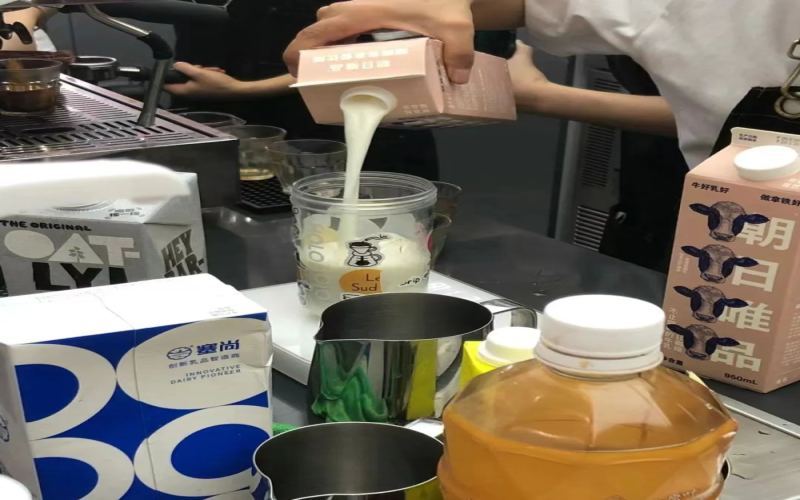
Asahi Weipin launches a transparent clear milk, taking clarified milk from handmade to mass production
In coffee drinks, milk has always been latte's soulmate, and its quality directly affects the taste performance of the final product. In recent years, the continued heating up of the coffee market has also brought a group of high-quality milk brands into the public eye, and Asahi Weipin is one of the most noteworthy. The brand recently launched a transparent milk that overturns traditional perceptions—Clear Milk, claiming to have a lighter taste than milk yet be smoother and richer than water. The arrival of this product means that clarified milk, which in the past required baristas to spend a great deal of time making by hand, can now be mass-produced, bringing new possibilities to the creation of specialty coffee. How exactly is this transparent milk achieved? How does its taste differ from ordinary milk? This article will explain it in detail for you. [more…]

Unveiling Milk Clarification: Transparent Latte Flavor Test and Complete Brewing Guide
At the 2021 World Coffee in Good Spirits Championship, clarified milk made a stunning appearance, but it has still not entered the coffee market on a large scale, and can only be encountered occasionally in a few specialty coffee shops. How exactly is this "milk," which looks as clear as water, made? And what would a latte made with it taste like? Front Street Coffee decided to conduct an experiment firsthand, starting from the principle of milk clarification, step by step using lemon juice and milk to make transparent milk, then trying three methods respectively—drinking it directly, adding it to espresso, and adding sugar to neutralize the sourness—for a comprehensive review of the true flavor of clarified milk latte. If you are interested in specialty coffee creations and innovative ingredients, this hands-on test record will give you a direct answer. [more…]
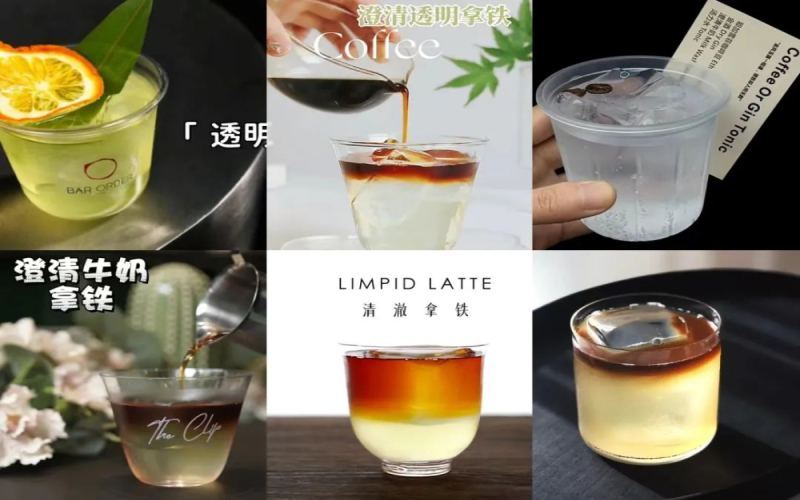
Can Milk Become Transparent? Decoding the Craft, Applications, and Market Prospects of Clarified Coffee
In the past two years, a peculiar category of drinks has emerged in the world of coffee specialties: they clearly contain milk, yet appear crystal clear and transparent—these are clarified coffee and transparent lattes. The clarification technique originated in the cocktail world as "milk washing," and has now been adopted by baristas in the development of creative beverages. This article will start with the principles behind clarified milk, trace its journey into the coffee scene, share a method for recreating it, and objectively analyze whether clarified coffee can become a new trend in the specialty drinks market, while also exploring its challenges regarding cost and scalability. [more…]

Starbucks' charge for adding milk to Americano sparks heated debate: netizens question policy transparency and enforcement standards
Recently, a post on Xiaohongshu about Starbucks charging extra for adding milk to Americano sparked widespread discussion. Some consumers reported that when ordering an Americano with milk during a fat-loss period, they were told by staff that it would cost extra. Customer service responded that since February 2022, adding more than 4 ounces of milk requires a fee. However, some netizens pointed out that this policy only applies to the black coffee series, while tea drinks and app orders can still get free milk. Some netizens claiming to be Starbucks partners said that generally, adding milk within 30ml is free, but inconsistent communication of store policies has led to chaotic enforcement. The incident reflects the brand's shortcomings in customized service and consumer communication, prompting thoughts on the reasonableness and transparency of the charges. [more…]
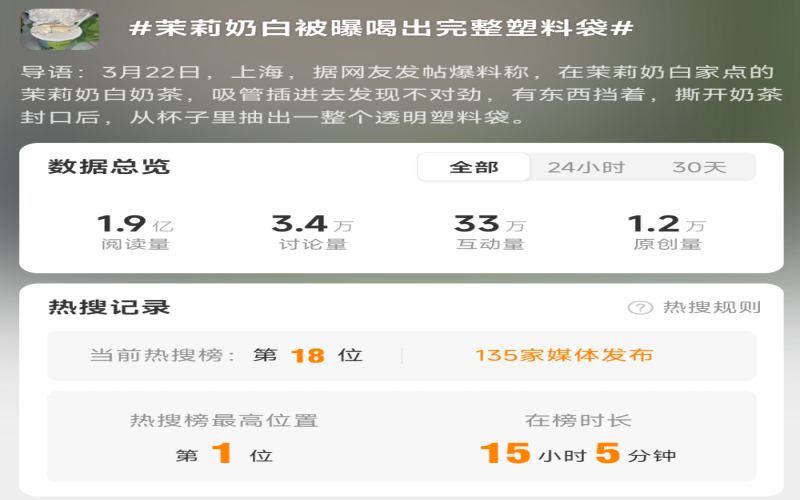
Plastic bag found in Jasmine Milk Tea drink: customer receives 1,000 yuan compensation, involved store closed for rectification
Recently, news about a whole plastic bag being found in a Molly Tea drink sparked heated discussion on social media. On March 22, a consumer in Shanghai pulled a large transparent plastic bag out of the cup while drinking the brand’s beverage, and the bag still had a brand label attached. The incident quickly trended on Weibo, with netizens questioning the tea beverage brand’s food safety management. The consumer later received 1,000 yuan in compensation, and the store involved was unable to provide complete operation footage because its monitoring equipment did not meet requirements. On March 23, Molly Tea officially issued an apology, admitting there had been negligence in its operating procedures and ordering the store to close for rectification. [more…]

What is the principle behind milk-washed coffee? How to make a clarified latte with milk and espresso, plus the method and recipe ratios
When most people think of a combination of milk and espresso, the first things that come to mind are classic milk coffees with milk foam, such as lattes and cappuccinos. But the same ingredients, processed with a different method, can take on a completely different appearance and texture. This article introduces a technique called "milk washing"—using the principle that casein coagulates when milk meets acid to remove the fat and protein particles from milk, leaving behind a transparent whey liquid. This time, Front Street Coffee's approach differs from the usual one: during the clarification process, espresso is added directly, so that the entire drink is clarified together, resulting in a "special latte" that looks similar to pour-over coffee but has rich, layered flavors. The article will explain in detail the required materials, recipe ratios, and step-by-step instructions, making it a useful reference for enthusiasts who want to try making specialty coffee at home. [more…]
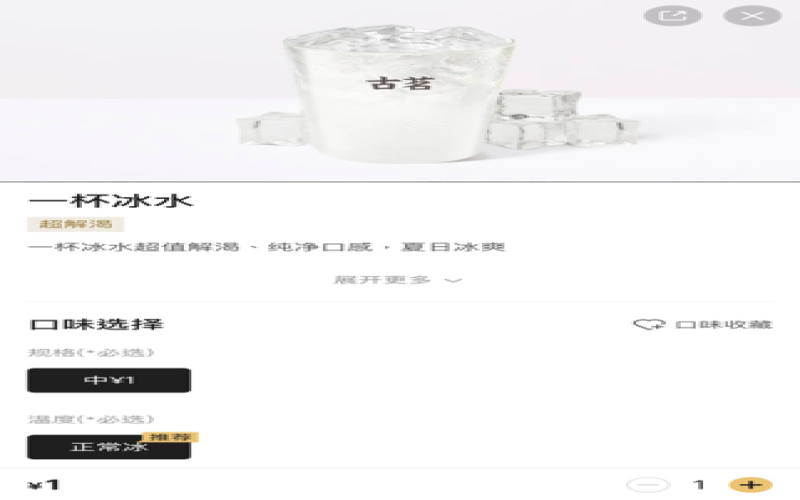
Guming's new 1-yuan ice water sparks debate: Is transparent pricing behind it considerate service or an unnecessary move?
Recently, the mini-program menu at Good-Me has quietly been updated, and a cup of ice water priced at 1 yuan has attracted widespread attention. This simple drink, consisting of a plastic cup, ice cubes, and drinking water, has been creatively reinterpreted by netizens in various ways—adding espresso to make iced Americano, mixing it with milk and boba to create a topped tea drink, or even replicating preserved plum lemonade. However, controversy has followed: many consumers point out that chain brands such as KFC and McDonald's, as well as street-side cafes, provide drinking water for free, and bringing your own cup to a Good-Me store also gets you ice water at no cost. Some employees even reveal that the packaging cup alone costs 7 mao, and with ice cubes and a straw added, each cup sold is actually a loss. Last year, Mixue Bingcheng's 1-yuan ice cup was withdrawn by franchisees one after another because it was unprofitable. Will Good-Me's move this time repeat the same mistake? Some also believe that clear pricing actually saves the awkwardness of communication, allowing those too embarrassed to ask to feel at ease. Front Street Coffee takes you to find out. [more…]
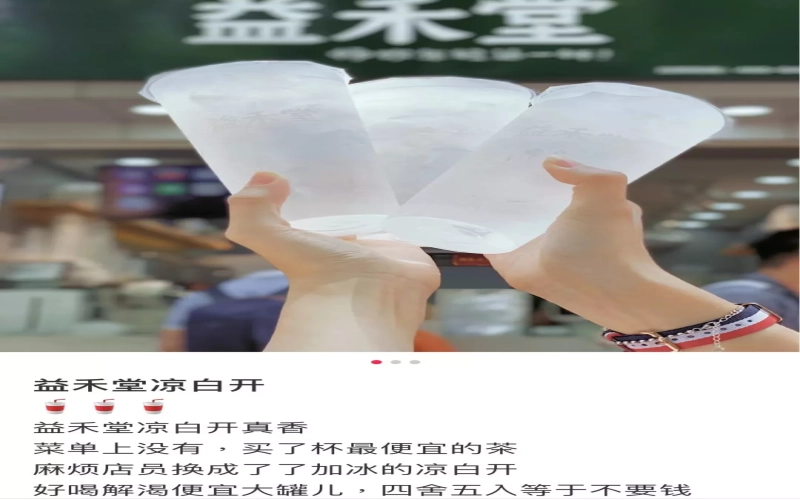
Why has ice water become the new social media favorite? Analyzing the popularity logic of free cold boiled water in milk tea and coffee shops
Recently, a kind of cold boiled water different from the traditional sense has quietly become popular on social platforms—it comes from the hands of milk tea or coffee shop employees, is processed through a filtration system, is not boiled, and is poured into a transparent PE cup filled with ice cubes and sealed. Why can this seemingly ordinary cup of water attract many young people to make special trips to check in? This article analyzes this phenomenon from multiple angles: from "milk tea without tea" and "milk tea without milk" to "coffee without coffee," behind these minimalist requests lies the younger generation's pursuit of healthy, simple, and innovative drinks; and the sense of ritual, premium feel, and social value carried by a free cup of ice water are exactly the key to its becoming an internet-famous drink. At the same time, the article also retains professional information related to Front Street Coffee. [more…]
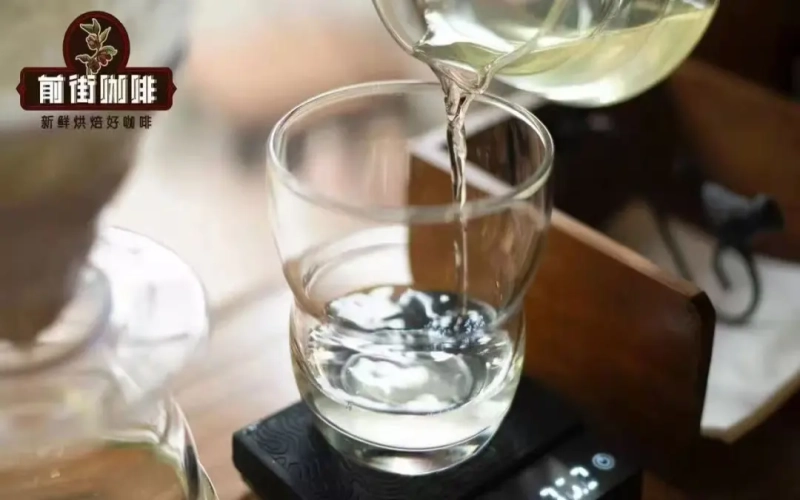
Espresso Special Milk-Washed Latte Making Guide: Ingredient Ratios, Step-by-Step Details, and Practical Recipe
Milk washing is a process that involves mixing an acidic ingredient with milk to curdle the casein, then filtering out a transparent milk serum. Thanks to its striking visual presentation and unique mouthfeel, it is used by many coffee shops in the making of specialty coffee drinks. However, although the process is not complicated, there are quite a few details to pay attention to. If you simply add an acidic substance and coffee directly to milk, the resulting clarified liquid is often difficult to drink as is. To make a good-tasting milk-washed coffee, in addition to the basic ingredients, flavoring components such as sugar are needed to balance the acidity, while the choice of coffee beans, the usage ratio, and the steeping time will all significantly affect the final flavor. This article will cover the ingredients, steps, and recipes for milk washing, and share Front Street Coffee's specific recommendations on bean selection. [more…]
The Correct Way to Approach Coffee Tasting: A Complete Guide from Flavor Composition to Sipping Steps
The flavor of a cup of coffee is not a single dimension, but rather an interweaving of four basic tastes: bitterness, acidity, sweetness, and astringency. To truly understand the cup of coffee in your hands, you need to engage your sense of smell, taste, and sight, much like tasting wine, and follow a scientific tasting process. This article will start with the composition of coffee's taste and gradually break down how to fully experience the layers of coffee through steps such as smelling the aroma, taking small sips, adding sugar, and adding milk. It will also share practical criteria for judging the quality of a cup of coffee—including the differences between transparency, concentration, and cloudiness, and why it should be drunk while hot. Whether you are a beginner pour-over enthusiast or a seasoned drinker who relies on Front Street Coffee beans daily, this method can help you more fully appreciate the essence of every cup of coffee. [more…]
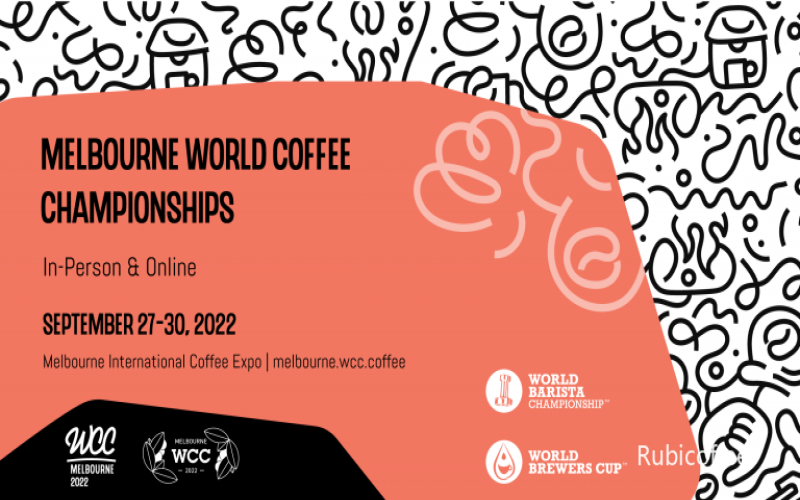
With the 2022 WBC and WBrC about to kick off in Melbourne, past competitors are calling for transparent and inclusive reforms to the competitions.
The 2022 World Barista Championship (WBC) and World Brewers Cup (WBrC) will be held concurrently in Melbourne, Australia, from September 27 to 30. As top-tier events in the coffee world, WBC and WBrC have for years driven the development of the specialty coffee industry and the professionalization of baristas. However, in recent years, multiple past champions and competitors have pointed out shortcomings in the events regarding scoring transparency, judge selection, theme setting, and gender inclusiveness, calling for reform. This article will walk you through the latest developments of the events and take an in-depth look at competitors' views and suggestions for the future development of WBC. [more…]
A Complete Guide to Steaming Milk for Coffee Beginners: Principles, Tools, Steps, and Blending Techniques
To make a velvety, smooth latte or cappuccino at home, steaming milk is an unavoidable fundamental skill. This article starts with the principles of milk foam, first explaining the roles of the two stages—"aeration" and "texturing"—then compares the pros and cons of tools such as electric handheld frothers, manual frothing pitchers, hot/cold electric milk frothers, and espresso machine steam wands, with a key breakdown of the complete steam frothing process. The content covers the effects of milk fat and temperature, the choice of steam wand hole count and dryness, the considerations for pitcher size and shape, as well as practical tips on insertion angle, judging by sound, controlling aeration volume, and testing integration. The article also incorporates recommendations from Front Street Coffee, offering practice suggestions suitable for beginners. [more…]
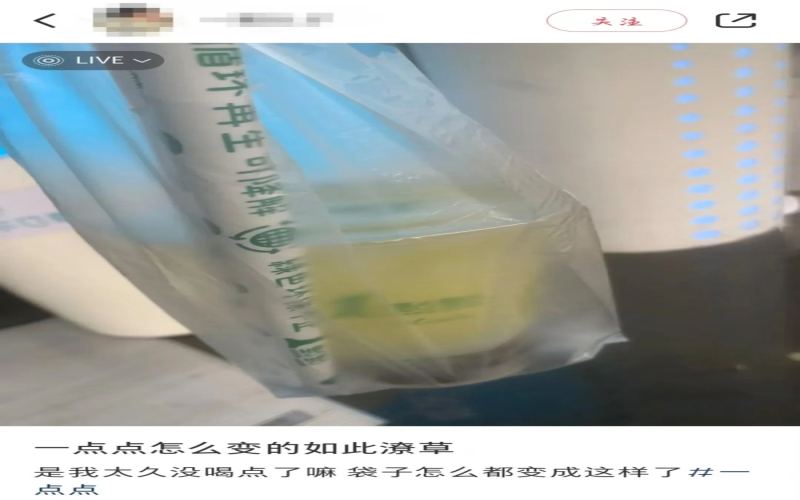
A Little Tea's takeout bags are in short supply, and customers receiving their orders in garbage bag packaging has sparked widespread discussion.
Recently, some consumers reported that when buying a cup of Yidiandian milk tea at a store, staff actually packed the drinks in thin transparent plastic bags or even black garbage bags, sparking heated discussion online. Behind this is not stinginess on the part of the store, but the fact that the paper bags promised by headquarters as replacements had still not arrived, leaving some stores in the awkward situation of "having no bags to use." Employees revealed that before the Chinese New Year, headquarters notified them that plastic bags would be replaced with paper bags, but there has still been no sign of them, and they were instead told they would have to wait until April. During this period, they went through the Chinese New Year and Valentine's Day consumption peaks, and many stores saw their packing bag inventories run critically low. At a time when many chain brands are launching co-branded paper bags, Yidiandian's insistence on plastic bag packaging has also sparked polarized discussion among fans. This article will walk you through the whole incident and the reactions from all sides. [more…]
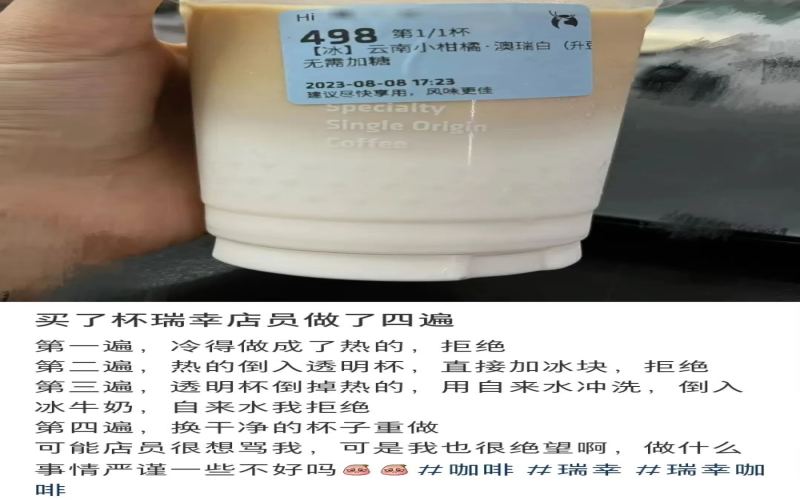
Luckin employee took four attempts to serve the order, customer complaints about non-standard operation spark heated discussion
Recently, a netizen shared on social media their experience ordering at Luckin: a single cup of coffee was repeatedly remade by the staff four times before they finally got it. From getting the hot/iced order wrong, to rinsing the cup with tap water, to being stopped by a colleague when about to add ice and milk, the whole process left many onlookers exclaiming how absurd it was. The incident also sparked heated discussion about Luckin's employee training, operating standards, and food safety. What exactly happened? Was the customer's complaint reasonable? And what problems did the store's operations expose? Let's take a look. [more…]
Origin Selection for Home Espresso Beans: The Performance of Single-Origin SOE on Home Machines
A home semi-automatic espresso machine doesn't necessarily mean you can only brew espresso blends—single-origin SOE can also produce distinctive shots on a home machine. The flavor profiles of SOEs from different regions vary noticeably; choose the right region, and even a home machine can deliver espresso with regional character. Mandheling SOE is the rich, full-bodied choice for home machines. Mandheling is harvested [more…]
Can IceBock milk be drunk directly? A hands-on guide to making your own IceBock Dirty coffee
Can icebock milk be drunk directly? Is it really difficult to recreate an icebock Dirty coffee at home? This time, Front Street Coffee steps up personally, starting from the principle of freeze distillation and demonstrating step by step how to make rich, mellow icebock at home using a refrigerator and fresh milk, as well as putting its concentration difference against regular fresh milk to the test. The article also shares the complete process of making a Dirty with icebock, including cup size selection, extraction parameters, and flavor performance. If you are also curious about this kind of purified milk with a cheesy, savory note and a viscous mouthfeel, why not follow along with Front Street Coffee and give it a try. [more…]

Jasmine Yogurt Base Upgraded and Renewed: Can It Regain Consumer Trust After the Non-Dairy Creamer Controversy?
Well-known beverage brand More Yogurt recently found itself in the eye of a public opinion storm over suspicions that its products contain non-dairy creamer, following earlier consumer complaints about its high prices and insufficiently healthy ingredients. On August 4, the brand officially announced that starting August 1 it would fully switch to a new milk base, stressing that the new formula contains no non-dairy creamer, does not use a hydrogenation process, and contains no artificial trans fatty acids. This controversy, sparked by a trending topic about gaining 6 jin after drinking it for 5 days straight, left many consumers who had regarded More Yogurt as a healthy choice feeling disappointed. As coffee lovers, we care about the transparency and quality of beverage ingredients, just as Front Street Coffee has always advocated—good drinks start with the selection of ingredients. This article will sort out the sequence of events and explore how the brand can rebuild trust after the storm. [more…]
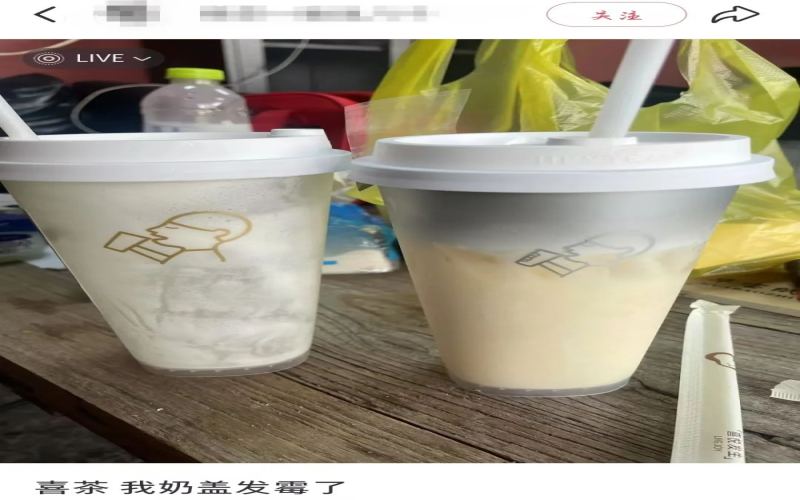
Heytea's new silver-coated cold drink cup sparks debate: the milk cap line is obscured, consumers mistake it for spoilage, and staff find it inconvenient to use.
Heytea recently switched to new transparent plastic cups for cold drinks, adding a silver-gray decorative coating to the top of the cup and changing its brand logo to silver-gray as well. This design change has sparked discussions from multiple sides: some customers mistakenly thought the milk cap had gone moldy, milk cap lovers worried they could no longer judge the amount of milk cap by appearance, and some netizens felt the silver coating easily reminded people of something inedible or spoiled. Meanwhile, Heytea employees also reported that the fill lines and milk cap lines on the new cups were hard to recognize because they were obscured by the coating, making it more difficult to judge product standards when manually adding milk cap. Although the new cups look more layered and premium in photos, the misunderstandings and inconvenience in actual use have come along with them. This article is compiled from Coffee Workshop, and Front Street Coffee presents the full picture of the incident for you. [more…]

Choosing Low-Acid, Sweet-Finish Coffee Beans by Roast Level: From Medium-Light to Dark Roast
If you want a cup of coffee where the acidity doesn't steal the show, there's sweetness on the palate, and aroma that lingers after you swallow, roast level is a very practical screening clue. It affects the brightness of the fruit acidity, the caramelized sweetness, and the body. Even among black coffees, a light-to-medium roast can be crisp and transparent, a medium roast is rounder, and a medium-dark or dark roast tends to show cocoa, [more…]

Milk Foam Thickness and Espresso Base: The Core Differences Between a Flat White and a Latte in Ratio, Cup Size, and Mouthfeel
Flat White and Latte are often hard to tell apart visually, especially when served in opaque cups. Both consist of espresso, milk, and milk foam, yet the experience once they hit your palate is completely different. The root of the difference lies in foam thickness, cup size, and the choice of espresso base. A Latte has about 1cm of foam, a larger cup volume, and usually pairs with a traditional espresso; a Flat White has less than 0.5cm of foam, a smaller cup volume, and many coffee shops switch to a Ristretto shot instead. Starting from Front Street Coffee's own parameters and combining them with the tasting performance of the Dark Cocoa base blend, this article breaks down the flavor logic and preparation details of these two milk coffees one by one. [more…]